
flexible circuits
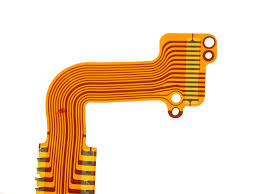
Many electronics industries rely on flexible circuits to create advanced, innovative products. They can be found in consumer electronic devices, computer peripherals, wearable technology, and even medical devices. The flexibility of these types of circuits unlock endless possibilities for manufacturers to design innovative products and components that are lighter, more comfortable, and better aligned with sustainable practices than traditional rigid PCBs.
Despite their complex construction, flexible circuits are thinner and lighter than traditional rigid PCBs, meaning they can be embedded in smaller, more compact products. They are also more durable than their rigid counterparts, able to withstand multiple cycles of flexing and bending. This durability is important in the cellular phone industry, where smartphones are designed with flexible screens that can bend and roll. The circuits behind these displays must be able to keep working while being flexed and manipulated in this way, and flexible printed circuit boards provide the reliability that is required.
Another key advantage of flexible circuits is their ability to disperse heat faster than rigid PCBs. This is because the narrow lines and spaces that are available on a flexible circuit board allow for shorter thermal routes, which leads to faster dispersal of heat. As a result, the temperature of the circuits can be lower and they can operate under higher power levels than their rigid counterparts.
What types of industries commonly use flexible circuits in their products?
In addition to their physical flexibility, flex circuits can also be molded into different shapes and forms. This is particularly useful for a variety of medical and pharmaceutical applications, where the devices must be able to survive in a highly specialized environment inside the human body. The ability to be molded allows for a more seamless integration of the circuits with the overall product, making it easier to fit into tight spaces.
The aerospace and defense industries also heavily rely on flexible circuits. Their ability to withstand vibrations and confined spaces is invaluable in the development of satellites, missile guidance systems, and other cutting-edge equipment. They can be used to create heads-up displays for pilots and provide the flexibility required in many advanced aircraft and spacecraft designs.
A hybrid of standard rigid PCBs and flex circuits, rigid-flex circuits are becoming increasingly popular in commercial and military electronics. They incorporate a network of rigid circuits that house components with a flexible substrate that connects them together. These flexible circuits are often used in laptops and smart devices, as well as in the military sector where reliability is paramount.
While it is important to understand the benefits of flex circuits, it is equally important to know which types of applications these advanced technologies are best suited for. For example, single-sided flex circuits are the most common type of flex PCB in production today. These are made with a thin, flexible substrate, conductive metal layer, protective solder mask, and silk screen that can support surface mount devices. They are the most commonly produced flex PCBs, and they are ideal for dynamic flexing applications because of their performance characteristics.

+ There are no comments
Add yours